What to Do After a Sewage Backup in Your Vancouver Home
Introduction
A sewage backup is one of the most unpleasant and potentially damaging emergencies a homeowner can face. When wastewater enters your home, it can quickly affect floors, walls, furniture, and other building materials while creating serious contamination concerns.
Unlike a clean water leak, sewage water can contain bacteria, contaminants, and other harmful substances. This is why sewage backup cleanup should be approached differently from ordinary water damage.
For homeowners in Vancouver, Burnaby, Coquitlam, Richmond, North Vancouver, and New Westminster, knowing what to do immediately after a sewage backup can help limit property damage and make the restoration process easier.
In this guide, we'll explain what to do after a sewage backup, what you should avoid, and when professional sewage cleanup and restoration is necessary.
Why Sewage Backups Are a Serious Problem
A sewage backup occurs when wastewater from a plumbing or sewer system flows back into a property instead of draining away normally. The problem may begin with a blocked sewer line, damaged plumbing, heavy rainfall, or an overloaded municipal sewer system.
Once contaminated water enters your home, it can spread across flooring and into other porous materials. If the water is not removed quickly, moisture can also become trapped inside walls, subfloors, insulation, and other structural materials.
Sewage damage can result in:
- Contamination of floors and other surfaces
- Damage to drywall and building materials
- Persistent unpleasant odors
- Moisture trapped inside the structure
- Mould growth if affected areas remain damp
- More extensive restoration requirements
Because sewage involves contaminated water, professional assessment and cleanup are often the safest approach.
Common Causes of Sewage Backups
Sewage backups can happen for several different reasons. Understanding the cause can help homeowners reduce the risk of future incidents.
Common causes include:
- Blocked or clogged sewer lines
- Damaged or collapsed sewer pipes
- Tree roots entering underground pipes
- Heavy rainfall and overloaded drainage systems
- Municipal sewer problems
- Plumbing system failures
- Backflow from a damaged or blocked drain
Basements are particularly vulnerable because they are often located below ground level. During periods of heavy rainfall, drainage systems can become overwhelmed and increase the risk of water and sewage entering lower levels of a property.
For additional prevention tips, read our guide on How to Prevent Basement Flooding in Vancouver Homes.
What to Do Immediately After a Sewage Backup
Once you discover a sewage backup, your first priority should be safety. Avoid rushing into the affected area without understanding the potential hazards.
1. Keep People and Pets Away
Do not allow children or pets to enter an area affected by sewage water. Contaminated water may contain harmful microorganisms and other contaminants.
If possible, isolate the affected area until it can be properly assessed and cleaned.
2. Stop the Source If It Is Safe
If the backup is caused by a plumbing problem that you can safely isolate, stop additional water from entering the affected area.
However, do not attempt complicated plumbing repairs yourself during an active sewage emergency. If the source cannot be safely identified or stopped, contact a qualified professional.
3. Avoid Contact With the Water
Do not walk through sewage-contaminated water unless absolutely necessary. Avoid touching contaminated surfaces with bare hands and do not allow contaminated water to spread to clean areas of your home.
Professional restoration technicians have the appropriate protective equipment and procedures for handling contaminated water.
4. Turn Off Electricity Only If It Is Safe
If sewage water has reached electrical outlets, appliances, extension cords, or electrical equipment, there may be an electrical hazard.
Do not enter standing water to reach an electrical panel. If there is any doubt about electrical safety, wait for qualified professionals.
5. Document the Damage
Before cleanup begins, photograph and document the affected areas if it is safe to do so.
Take pictures of:
- Standing water
- Damaged flooring
- Damaged walls and drywall
- Furniture and personal belongings
- Visible contamination
- Other affected areas of the property
Keeping detailed records can also help when communicating with your insurance provider.
What You Should NOT Do After a Sewage Backup
A common mistake is treating sewage like an ordinary water leak. Because sewage is contaminated, some typical DIY cleanup methods may be inappropriate or unsafe.
Avoid the following:
- Do not walk through contaminated water unnecessarily
- Do not use household fans to spread air from the affected area into other rooms
- Do not use contaminated furniture or personal belongings before they are assessed
- Do not attempt to clean extensive sewage contamination yourself
- Do not ignore sewage odors after visible water has disappeared
- Do not assume that materials are dry simply because the surface looks dry
Porous materials can absorb contaminated water and may require professional evaluation to determine whether cleaning, drying, or removal is appropriate.
Signs of Sewage Water Damage
Some sewage damage is immediately obvious, while other problems become noticeable only after the water has been removed.
Look for warning signs such as:
- Persistent sewage or musty odors
- Discoloration on floors or walls
- Swollen or warped flooring
- Soft drywall or baseboards
- Visible moisture
- Increased indoor humidity
- Mould growth
If you notice moisture or odors continuing after the initial cleanup, there may still be water trapped inside the structure.
Our guide on Signs of Hidden Water Damage in Your Home explains some of the less obvious warning signs homeowners should watch for.
Why Sewage Water Requires Professional Cleanup
Sewage cleanup is different from cleaning up a small amount of clean water. Contaminated water can affect surfaces and materials throughout the affected area, and improper cleanup can allow contamination or moisture to remain behind.
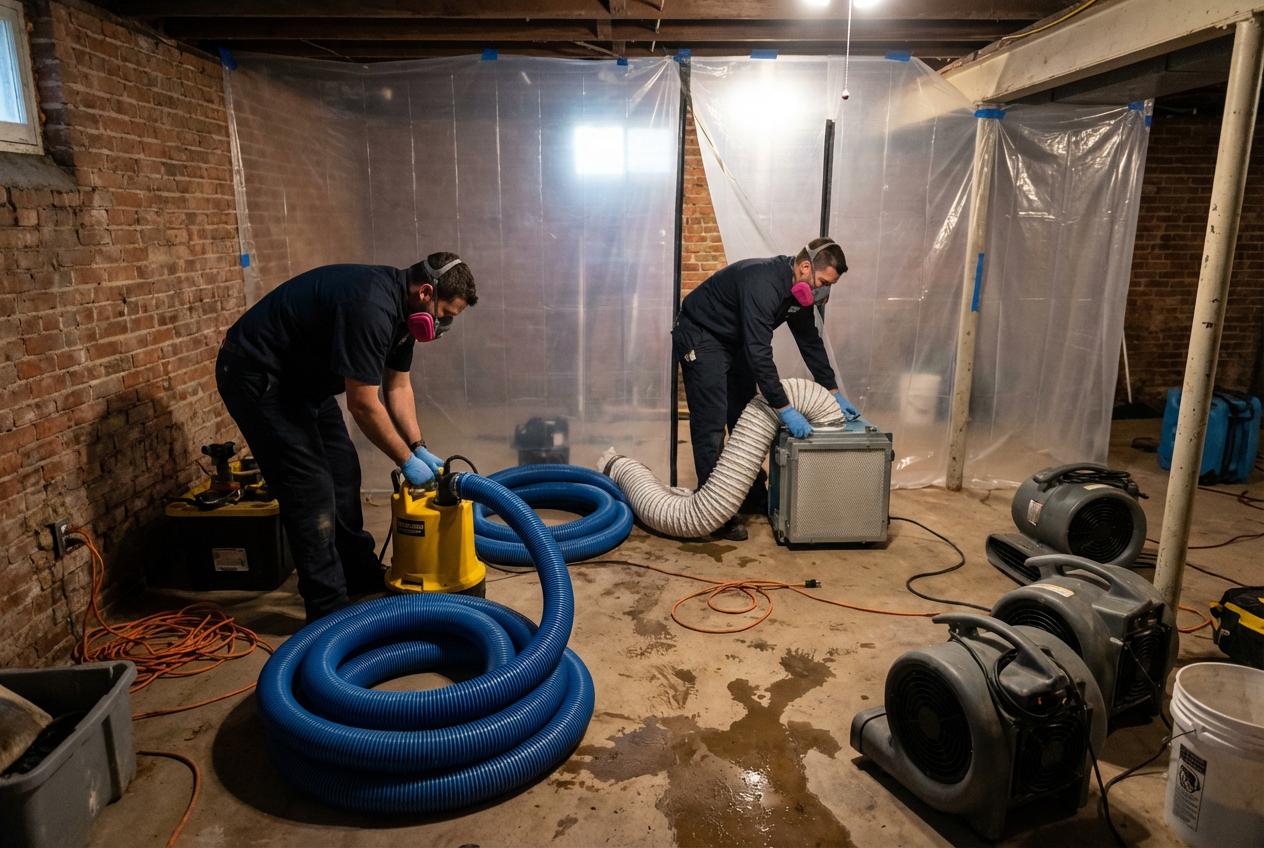
Professional restoration involves assessing the affected areas, removing contaminated water and materials where necessary, cleaning and sanitizing surfaces, and properly drying the structure.
Evercrest Restoration's water damage services include water extraction, structural drying, moisture detection, cleaning, sanitizing, and restoration. Sewage backups are also identified as one of the causes of water damage requiring professional attention. Water Damage Restoration Services can therefore be an important part of the recovery process when sewage has affected the property.
How Professional Sewage Cleanup Works
Every sewage backup is different, so the restoration process depends on the size of the affected area, the amount of contamination, and which building materials have been exposed.
1. Inspection and Assessment
The first step is determining where the sewage entered the property and how far the contamination has spread.
Professionals also assess affected floors, walls, ceilings, insulation, and other materials to determine the appropriate restoration approach.
2. Water and Wastewater Removal
Standing contaminated water needs to be removed as quickly and safely as possible. Professional extraction equipment can remove water more efficiently than standard household equipment.
3. Cleaning and Sanitization
Affected surfaces need to be properly cleaned and sanitized. Depending on the situation, some porous materials may not be suitable for restoration and may need to be removed.
4. Structural Drying
Removing visible water is only part of the process. Moisture can remain inside subfloors, walls, insulation, and other structural materials.
Professional Structural Drying Services use moisture detection equipment, air movers, dehumidification, and monitoring to ensure that affected materials are properly dried.
5. Final Restoration
Once contaminated materials have been removed or cleaned and the structure has been properly dried, damaged areas can be repaired and restored.
Can a Sewage Backup Cause Mould?
Yes. Sewage backups introduce both water and moisture into areas of the home where they should not be present. If moisture remains trapped inside walls, flooring, insulation, or other materials, mould can develop.
This is especially important after a backup that affects drywall, wood, carpet, or other porous materials.
Mould may not always be visible immediately. Persistent musty odors, recurring discoloration, or mould returning after cleaning can indicate that moisture remains somewhere inside the structure.
If mould is present, professional Mould Remediation Services may be required to address the affected area and underlying moisture problem.
When Should You Call a Restoration Company?
Professional help is recommended whenever sewage has entered your home, particularly when the affected area is large or contaminated water has reached porous building materials.
You should contact a restoration professional if:
- Sewage has entered your basement or living space
- Contaminated water has affected drywall or flooring
- The source of the backup is unknown
- There is a strong or persistent sewage odor
- You see signs of mould
- Moisture remains after water removal
- The affected area is too large for safe DIY cleanup
Fast action can help limit the spread of moisture and reduce the amount of material that may need to be removed or repaired.
If the sewage backup has also caused significant water damage, our guide What to Do Immediately After Water Damage in Vancouver provides additional steps homeowners can take immediately after water enters the property.
Sewage Cleanup in Vancouver and Surrounding Areas
Sewage backups can happen anywhere in the Vancouver area, from detached homes and townhouses to condos, rental properties, and commercial buildings.
Evercrest Restoration serves Vancouver and surrounding Lower Mainland communities, including Burnaby, Coquitlam, New Westminster, Richmond, North Vancouver, and other nearby areas.
Whether the problem is caused by a basement backup, plumbing failure, or another contaminated water incident, getting professional help quickly can reduce the risk of further property damage.
Why Choose Evercrest Restoration?
Evercrest Restoration provides professional restoration services throughout Vancouver and the Lower Mainland, with 24/7 emergency response and modern drying and monitoring equipment. The company also provides insurance claim assistance and free damage assessments. :contentReference[oaicite:1]{index=1}
- 24/7 emergency response
- Fast response throughout Vancouver and the Lower Mainland
- Professional restoration technicians
- Modern drying and moisture monitoring equipment
- Water extraction and structural drying
- Cleaning and sanitizing of affected areas
- Insurance claim assistance
Frequently Asked Questions
How dangerous is a sewage backup?
A sewage backup can create contamination concerns and should not be treated like an ordinary clean-water leak. Avoid unnecessary contact with sewage water and have the affected area assessed and cleaned appropriately.
Can I clean up sewage water myself?
Small incidents may sometimes be manageable depending on the circumstances, but extensive sewage contamination should be handled by restoration professionals. Professional cleanup helps reduce exposure risks and ensures affected areas are properly cleaned and dried.
How quickly should sewage cleanup begin?
Cleanup should begin as soon as it is safe to do so. Delaying removal and drying allows moisture and contamination to affect more materials and can increase the complexity of restoration.
Can sewage damage cause mould?
Yes. If moisture remains trapped in building materials after a sewage backup, mould can develop. Proper extraction and structural drying are important parts of preventing moisture-related problems.
Does insurance cover sewage backup damage?
Insurance coverage depends on your specific policy and the cause of the sewage backup. Document the damage and contact your insurance provider to understand what coverage may apply.
How long does sewage cleanup take?
The timeline depends on the size of the affected area, the amount of contamination, the materials involved, and the extent of drying and restoration required. A professional assessment is the best way to determine the expected timeline.
Final Thoughts
A sewage backup is more than just a plumbing problem. Contaminated water can affect flooring, walls, furniture, and structural materials, while remaining moisture can create additional problems if the property is not properly dried.
The most important steps are to keep people and pets away from contaminated areas, avoid unnecessary contact with sewage water, document the damage, and arrange professional assessment and cleanup when necessary.
If your home in Vancouver, Burnaby, Coquitlam, Richmond, North Vancouver, or New Westminster has experienced a sewage backup, acting quickly can help limit further damage.
Need Professional Sewage Cleanup?
Contact Evercrest Restoration for professional restoration assistance and emergency response throughout the Vancouver area.