How Long Does Water Damage Restoration Take in Vancouver?
Introduction
One of the first questions homeowners ask after discovering water damage is: How long will it take to restore my home?
The answer depends on several factors, including the amount of water, the affected area, the type of materials involved, and how quickly professional restoration begins.
A small localized water leak may be resolved relatively quickly, while extensive flooding or water trapped inside walls and flooring can require several days or longer. In Vancouver, Burnaby, Coquitlam, Richmond, North Vancouver, and New Westminster, heavy rainfall, plumbing failures, and basement flooding can all contribute to water damage emergencies.
In this guide, we'll explain the typical water damage restoration timeline, what happens during each stage, and what factors can make the process take longer.
How Long Does Water Damage Restoration Usually Take?
Water damage restoration does not have a single fixed timeline. Every property and water damage situation is different.
For minor water damage, cleanup and drying may take only a few days. More extensive damage involving walls, flooring, insulation, or structural materials can take longer, especially when hidden moisture is discovered.
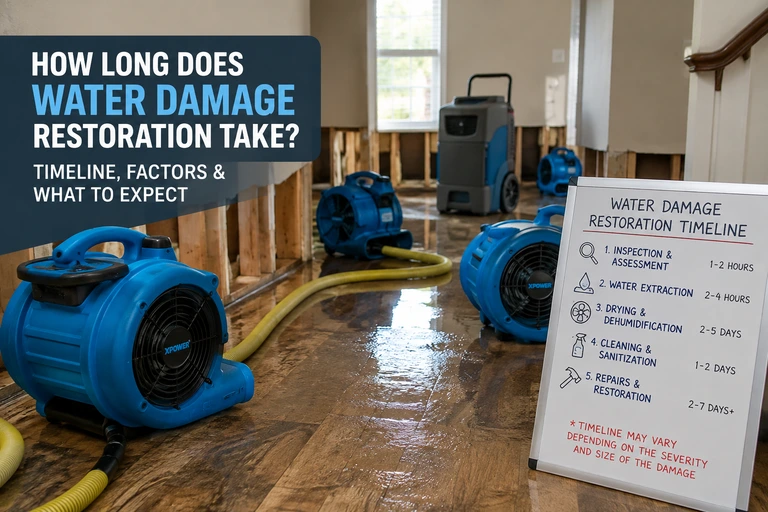
In general, the restoration process may involve:
- Initial inspection and assessment
- Water extraction
- Drying and dehumidification
- Cleaning and sanitization
- Moisture monitoring
- Repairs and reconstruction
The sooner the restoration process begins, the better the chances of limiting the extent of the damage and preventing additional moisture-related problems.
What Factors Affect the Restoration Timeline?
Several factors determine how long water damage restoration will take. Two properties with seemingly similar water damage can have very different restoration timelines.
1. Severity of the Water Damage
The amount of water and how far it has spread are major factors.
A small localized leak may be relatively straightforward to address, while a flooded basement or multiple affected rooms may require significantly more extraction, drying, and restoration work.
2. Source of the Water
The source of the water can also affect the restoration process.
Clean water from a supply line may require a different approach than contaminated water from a sewage backup or flood. Contaminated water may require additional cleaning, sanitization, and removal of affected materials.
If your property has experienced a sewage backup, our guide What to Do After a Sewage Backup in Your Vancouver Home explains what homeowners should do immediately.
3. Size of the Affected Area
A water leak affecting one small room is usually easier to restore than water damage affecting several rooms or an entire basement.
The larger the affected area, the more equipment, monitoring, and drying time may be required.
4. Type of Building Materials
Different materials absorb and retain moisture differently.
Drywall, hardwood, carpet, insulation, subflooring, and wood framing can all react differently to water exposure. Porous materials can absorb significant amounts of moisture and may require additional drying or, in some cases, removal.
5. Hidden Moisture
Visible standing water is only part of the problem. Moisture can travel underneath flooring, inside walls, and into insulation where it cannot be seen.
This is why professional moisture detection and monitoring are important during restoration.
Learn more about the warning signs in our guide to Signs of Hidden Water Damage in Your Home.
6. Mold Growth
If water remains trapped in building materials, mold may develop and add another stage to the restoration process.
When mold is discovered, additional remediation may be required before the property can be fully restored.
The Water Damage Restoration Process
Professional restoration generally follows several stages. The exact process depends on the circumstances and condition of the property.
1. Inspection and Assessment
The restoration process begins with an assessment of the affected property.
Professionals identify the source of the water, determine how far the damage has spread, and inspect affected materials. Moisture detection equipment may be used to identify areas that are not visibly wet.
2. Water Extraction
Standing water needs to be removed as quickly as possible.
Professional extraction equipment can remove large amounts of water more efficiently than standard household equipment. Faster extraction can help reduce the amount of moisture absorbed by floors, walls, and other materials.
For professional Water Damage Restoration Services, Evercrest Restoration provides water extraction and restoration assistance throughout the Vancouver area.
3. Drying and Dehumidification
After visible water has been removed, the structure still needs to be dried.
Air movers and dehumidifiers are used to remove moisture from affected materials and the surrounding air. Moisture levels are monitored during the process to determine when the structure has reached appropriate drying conditions.
Our Structural Drying Services are designed to address moisture that may remain inside walls, flooring, and other structural materials.
4. Cleaning and Sanitization
Depending on the source of the water, affected surfaces may require professional cleaning and sanitization.
This is particularly important when water is contaminated or when materials have been exposed to prolonged moisture.
5. Repairs and Restoration
Once affected areas have been properly dried and cleaned, repairs can begin.
Depending on the severity of the damage, this may involve replacing drywall, flooring, insulation, trim, or other building materials.
Minor water damage may require limited repairs, while major incidents can involve more extensive reconstruction.
How Long Does Structural Drying Take?
Structural drying is one of the most important stages of the restoration process, and it cannot always be completed in a single day.
The drying time depends on factors such as the amount of moisture, the materials involved, temperature, humidity, airflow, and how deeply water has penetrated the structure.
Evercrest Restoration notes that structural drying commonly takes around 2 to 5 days, depending on the extent of the moisture and the affected materials.
During this stage, technicians may monitor moisture levels regularly and adjust drying equipment as necessary.
Can Water Damage Be Restored in One Day?
In some minor situations, initial water removal and cleanup may be completed quickly. However, complete restoration is not necessarily finished simply because visible water has disappeared.
Materials can remain damp beneath the surface even when they appear dry. Attempting to complete the process too quickly can leave hidden moisture behind and increase the risk of further damage.
For this reason, professional restoration focuses not only on removing visible water but also on confirming that affected materials have been properly dried.
What Can Make Water Damage Restoration Take Longer?
Several problems can extend the restoration timeline.
- Extensive flooding
- Water trapped behind walls
- Wet insulation
- Damaged subflooring
- Large amounts of absorbed moisture
- Mold growth
- Sewage or contaminated water
- Structural damage
- Limited access to affected areas
For example, a leak that initially appears minor may take longer to restore if moisture has traveled underneath flooring or into wall cavities.
Does Mold Change the Restoration Timeline?
Yes. Mold can make the restoration process more complicated.
If moisture remains untreated, mold can develop in damp materials. Once mold is discovered, the affected area may require additional assessment, containment, removal, cleaning, and remediation.
If you suspect mold after water damage, professional Mould Remediation Services can help address the affected area and underlying moisture problem.
Taking action quickly after water damage can reduce the likelihood of moisture remaining long enough for mold growth to occur.
How to Speed Up the Restoration Process
Homeowners cannot control every part of the restoration timeline, but taking the right steps immediately can help prevent unnecessary delays.
- Stop the water source if it is safe to do so
- Contact a restoration professional quickly
- Keep people and pets away from unsafe areas
- Document the damage for your insurance provider
- Do not cover wet materials with rugs or furniture
- Allow professional equipment to operate as directed
- Follow recommendations regarding damaged materials
If you've just discovered water damage, our guide What to Do Immediately After Water Damage in Vancouver provides a step-by-step overview of what homeowners should do first.
Water Damage Restoration in Vancouver and Surrounding Areas
Water damage emergencies can happen throughout the Vancouver area. Heavy rainfall, plumbing problems, appliance failures, and basement flooding can all result in significant moisture problems.
Evercrest Restoration provides water damage restoration services throughout Vancouver and surrounding communities, including Burnaby, Coquitlam, Richmond, North Vancouver, and New Westminster.
Whether the problem is a small localized leak or extensive water intrusion, a professional assessment can help determine the appropriate restoration approach and expected timeline.
Homeowners can also reduce their risk of future flooding by following the prevention recommendations in How to Prevent Basement Flooding in Vancouver Homes.
Why Choose Evercrest Restoration?
Evercrest Restoration provides professional restoration services for homeowners dealing with water damage throughout the Vancouver area.
- 24/7 emergency response
- Professional water extraction
- Advanced drying equipment
- Moisture detection and monitoring
- Structural drying services
- Mould remediation
- Insurance claim assistance
- Service throughout Vancouver and surrounding communities
Fast professional response can help identify hidden moisture, control the spread of water damage, and determine the most appropriate restoration plan.
Frequently Asked Questions
How long does it take to dry a house after water damage?
Drying time varies depending on the amount of moisture, affected materials, temperature, humidity, and ventilation. Professional structural drying commonly takes several days, with the exact timeline determined through moisture monitoring.
Can water damage restoration take more than a week?
Yes. Extensive water damage can take more than a week when significant structural repairs, material replacement, contamination cleanup, or mold remediation is required.
How long does drywall take to dry after water damage?
Drying time depends on how much water the drywall absorbed and how much airflow and dehumidification can be provided. Severely damaged drywall may need to be removed rather than dried.
How long does water damage restoration take after a flood?
Flood-related restoration can take several days or longer depending on the amount of water, size of the affected area, contamination level, and extent of structural damage.
Does mold make water damage restoration take longer?
Yes. If mold has developed because of prolonged moisture, additional remediation may be necessary before the restoration process can be completed.
Does insurance cover water damage restoration?
Coverage depends on your insurance policy and the cause of the water damage. Homeowners should document the damage and contact their insurance provider to determine what coverage may apply.
Final Thoughts
There is no single timeline for water damage restoration. A minor leak may be resolved relatively quickly, while extensive flooding, hidden moisture, contaminated water, mold, or structural damage can make the process considerably longer.
The most important factor homeowners can control is how quickly they respond. Prompt water extraction, professional drying, and proper moisture monitoring can help prevent a manageable water problem from becoming a much larger restoration project.
If your property has experienced water damage in Vancouver, Burnaby, Coquitlam, Richmond, North Vancouver, or New Westminster, professional assessment can help you understand the extent of the damage and what to expect during restoration.
Need Professional Water Damage Restoration?
Contact Evercrest Restoration for professional water damage restoration and structural drying services throughout the Vancouver area.